Is Primary School Free in Singapore? The Real Cost
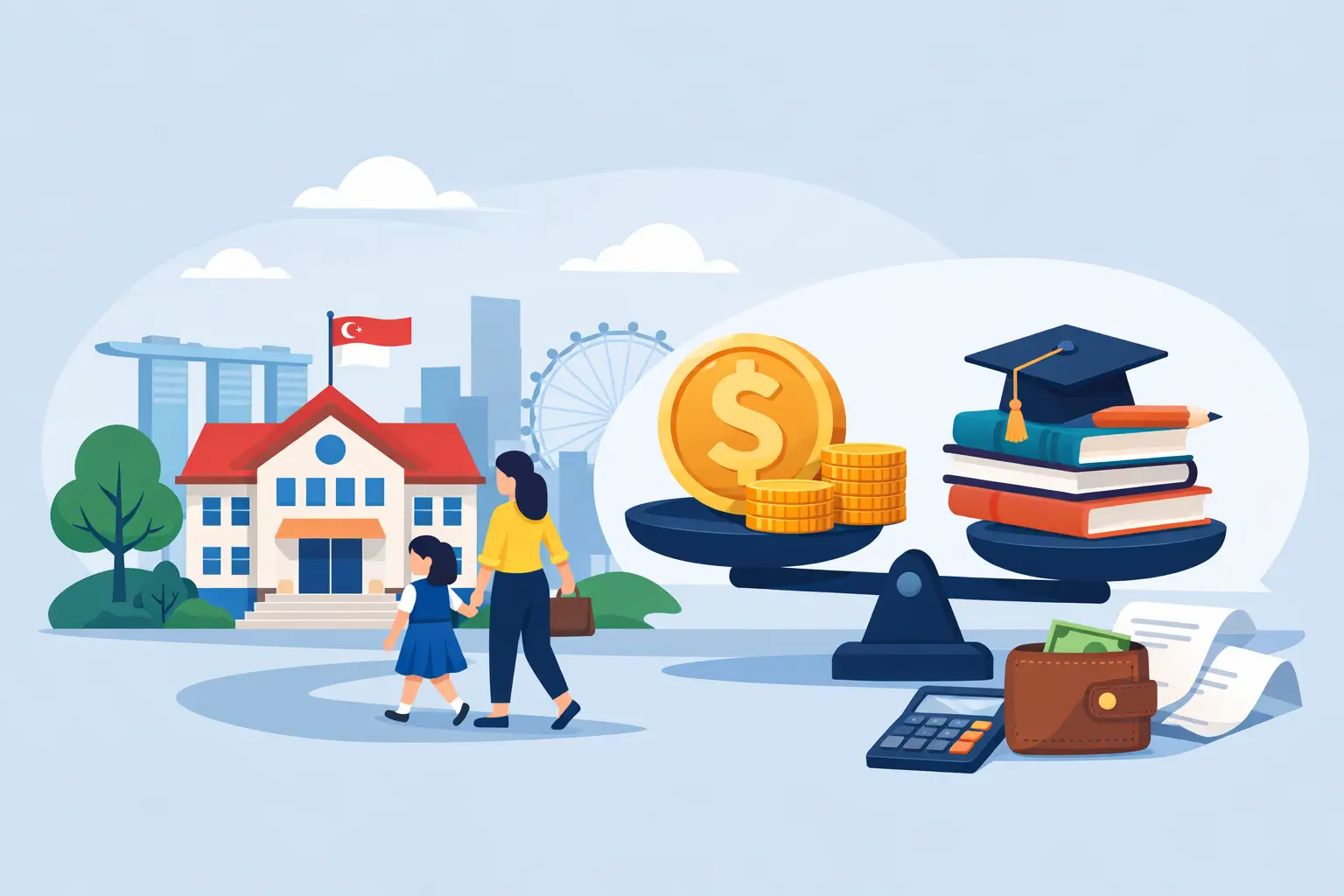
A place in a government primary school can be one of the best-value education options available to Singapore families. But when parents ask, is primary school free in Singapore, the most accurate answer is: tuition can be free for Singapore Citizens, yet school is not entirely cost-free.
There are monthly charges, uniforms, books, transport, meals, and the occasional activity or program to consider. For Permanent Residents and international students, the monthly school fees are also significantly higher. Understanding the full picture early helps families budget confidently and focus on what matters most – helping their child build strong foundations before the PSLE years arrive.
Is primary school free in Singapore for citizens?
Singapore Citizens do not pay monthly school fees at government and government-aided primary schools. This applies to the six years of primary education, from Primary 1 through Primary 6.
However, parents still pay a monthly miscellaneous fee. This supports items such as school activities, teaching materials, student welfare initiatives, and school facilities. For Singapore Citizens in primary school, the fee is commonly about $13 per month, although families should confirm the current amount with their child’s school because fees and arrangements can change.
So, “free” means there is no tuition fee charged by the school. It does not mean that every part of a child’s school experience comes without cost.
The distinction matters. A family may pay only a modest amount directly to the school each month, but the practical annual cost of schooling includes several smaller expenses that add up over time.
What do PRs and international students pay?
Primary school fees are subsidized most heavily for Singapore Citizens. Singapore Permanent Residents pay more, while international students pay the highest monthly fees at government and government-aided schools.
As a general guide, current primary school monthly school fees are around $385 for Permanent Residents, $535 for international students from ASEAN countries, and $935 for other international students. These charges are in addition to the monthly miscellaneous fee.
For a Permanent Resident family, that means school fees alone can exceed $4,000 a year before uniforms, books, transport, food, and other expenses. For international students, the annual amount is much higher. Fee schedules may be revised, so parents should always check the latest official school fee information before making enrollment or relocation decisions.
Government-aided schools generally follow the same fee framework, although they may have their own administrative processes and contributions. Independent schools and international schools operate differently and usually have much higher fees.
Why citizenship status changes the cost
Singapore’s public education system is designed to give citizens broad access to quality schooling at highly subsidized rates. The difference in fees reflects the level of government subsidy available to each student group.
That does not mean a higher-fee student receives a different primary school curriculum. Students in the same school learn under the national curriculum and sit for the same school-based assessments. The cost difference is about eligibility for subsidy, not the quality of instruction a child receives in class.
The costs families should still plan for
Even when school fees are zero, parents should prepare for the everyday expenses of primary school. Some are one-time purchases at the start of the year; others recur every month or term.
Uniforms, shoes, socks, and school bags are often the first costs parents notice. A child may need a standard uniform, PE attire, and replacement items as they grow. Textbooks, workbooks, stationery, art materials, and assessment books can also create a sizeable beginning-of-year bill, especially in Primary 1.
Daily spending is another consideration. School meals, bus or public transportation fares, student-care arrangements, and occasional class activities may all be part of a family’s monthly budget. Depending on the school and the child’s needs, parents may also pay for enrichment programs, camps, learning journeys, or devices.
These costs vary widely. A child who walks to school and brings food from home will have a different budget from a child who takes a private school bus and attends after-school care. The key is not to assume that no school fee means no education expenses.
Financial support may be available
Families facing financial pressure should not assume that school-related costs are out of reach. Eligible Singapore Citizen students may receive support through financial assistance programs, which can help with school fees, miscellaneous fees, textbooks, uniforms, transportation, meals, and other education-related needs.
The exact support available depends on household circumstances and the program’s eligibility criteria. Some schools also have their own assistance channels or can guide parents toward appropriate applications. It is worth asking early, particularly before the new school year begins, rather than waiting until costs become difficult to manage.
Support is not only for families in severe financial hardship. Income thresholds and assistance structures differ, and a conversation with the school can clarify what help may be available. Parents should prepare the required household income documents and apply within the stated timelines.
A low school fee does not remove learning pressure
Singapore primary education is affordable for citizens, but it is academically demanding. By Primary 3 and Primary 4, many children are managing more complex reading comprehension, composition writing, fractions, problem-solving strategies, and Science concepts. By Primary 5 and Primary 6, the pace and PSLE preparation can feel intense.
This is where many parents discover that the real investment is not simply the school bill. It is the support a child needs to understand concepts properly, complete work independently, and recover quickly when a topic becomes confusing.
A student may attend school every day but still struggle with a specific gap: inference questions in English, model drawing in Math, Chinese composition structure, or open-ended Science answers. Left unaddressed, small gaps can become frustrating habits of guessing, avoiding homework, or losing confidence before major examinations.
Extra academic support is not necessary for every child, and it should never be chosen simply because other families are doing it. It can be useful, however, when a student needs more guided practice than a busy classroom can provide, clearer feedback on mistakes, or a structured plan to move from a passing grade to a stronger one.
Choosing support that delivers value
If parents decide on tuition, the best question is not, “What is the most expensive option?” It is, “What will help my child make measurable progress?” A good program should identify the child’s weak areas, teach the right methods, provide enough practice, and explain errors clearly.
For primary students, quality support often means small classes, experienced teachers, targeted worksheets, and attention to school exam formats. It should strengthen understanding rather than train children to memorize answers. This is especially important in English writing and comprehension, Mathematics problem-solving, and Science open-ended questions, where clear thinking and accurate answering techniques matter.
Everyday Tuition supports primary learners with structured lessons in English, Chinese, Math, and Science, led by experienced educators who focus on stronger concepts, smarter exam technique, and better grades. Families should still choose a schedule and level of support that fits their child’s needs and household budget.
Plan early, then keep the focus on progress
Primary school in Singapore is tuition-free for Singapore Citizens in government and government-aided schools, but families should budget for miscellaneous fees and the real costs around school life. Permanent Residents and international students should plan more carefully for monthly fees, which can be substantial.
More importantly, use the affordability of public schooling as an opportunity to invest attention where it counts: your child’s confidence, foundations, and readiness for the next level. A child who understands today’s lesson well is better positioned to face tomorrow’s paper with calm and capability.