Can Small Classes Improve Grades for Students?
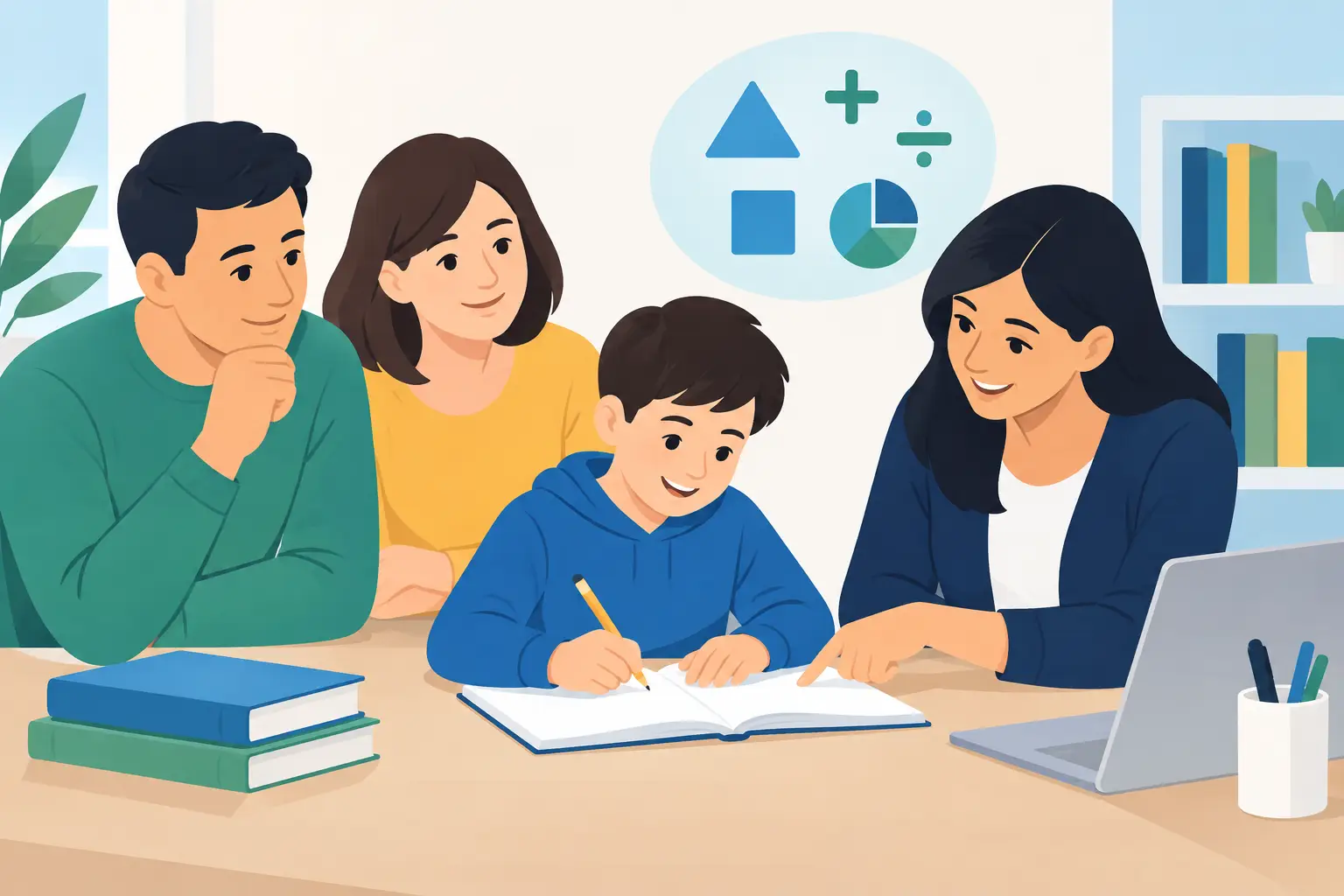
A student can sit through an entire lesson without asking the one question that would change everything. They may not understand why a fraction was simplified incorrectly, how to develop a Science answer, or why a composition lacks impact. The question is: can small classes improve grades? For many students, the answer is yes – when a smaller class gives them more direct teaching, faster feedback, and purposeful exam practice.
Better grades do not come from a low student-to-teacher ratio alone. They come from what an experienced teacher can do with that time: spot a gap early, explain a concept another way, correct a recurring mistake, and make sure the student can apply the skill independently. That is where small-group tuition can make a visible difference.
Can Small Classes Improve Grades?
In a large classroom, even a committed teacher has to divide attention across many learners, abilities, and questions. Some students follow the lesson quickly. Others need a second explanation but stay quiet because they do not want to hold up the class. By the time a test reveals the problem, weeks of learning may have already built on an unsteady foundation.
A small class gives teachers a clearer view of each student’s work. They can see whether an incorrect Math answer came from a calculation slip, a weak understanding of ratios, or difficulty turning words into equations. In English, they can identify whether comprehension marks are lost because the student cannot find evidence, misunderstands the question, or writes answers that are too vague. These distinctions matter. A generic explanation rarely fixes a specific problem.
Small classes also make it easier for students to participate. Asking questions becomes less intimidating, and teachers can check understanding during the lesson instead of assuming a nod means mastery. A student who explains a method aloud, attempts a challenging question, and receives correction straight away is more likely to remember the learning when an exam question looks different.
The Grade Improvement Happens Between Lessons
The strongest small-class programs do more than teach a weekly topic. They create an active feedback loop. A teacher teaches the concept, watches the student apply it, identifies the error, and gives the student another chance to get it right. This cycle is especially valuable in subjects where small mistakes can become expensive during exams.
For Mathematics, students need more than worked examples. They need to know how to choose a method under pressure. A teacher in a small group can challenge a student who reaches for the wrong formula, ask them to justify each step, and show them how to organize their work so careless errors are easier to catch. Over time, that builds both problem-solving skill and exam confidence.
For Science, open-ended questions often separate students who know a fact from students who can use it accurately. A student may understand a Biology, Chemistry, or Physics topic but lose marks because their explanation lacks the required scientific terms, relationship, or conclusion. Focused marking and guided rewriting teach students what a complete answer looks like.
English and Chinese benefit from the same attention. Writing improves when students receive specific comments on their ideas, organization, vocabulary, grammar, and relevance to the prompt. “Write more” is not useful feedback. Showing a student how to strengthen a topic sentence, support a point, or edit a sentence for clarity is useful feedback. In a smaller class, there is more room for that level of coaching.
Why Small Classes Are Not a Magic Fix
A small class can improve grades, but class size is not a guarantee. A student will not progress simply because fewer people are in the room. The teaching still needs to be structured, the work needs to be challenging, and the student needs to practice consistently between lessons.
The teacher’s expertise matters just as much. Students need someone who understands school expectations, common exam traps, and how to explain difficult ideas in more than one way. They also need a lesson plan that balances concept building with application. Endless worksheets without correction can create the appearance of hard work while leaving the real weakness untouched.
There is also a practical balance. One-to-one tuition may be helpful for a student with highly specific needs or a major learning gap. However, a well-run small group can offer personalized support while allowing students to learn from others’ questions and solutions. Hearing a classmate explain a different approach can make a difficult concept click. For many families, it is also a more accessible route to expert instruction and steady academic support.
What Parents Should Look For in a Small-Class Program
Parents should look beyond a class-size promise and ask what happens during the lesson. Are students expected to attempt questions, explain their thinking, and correct errors? Is there regular marking? Does the teacher know where each student is struggling? Are lessons aligned with the student’s school syllabus and upcoming assessments?
The best programs make progress visible. A parent should be able to understand whether their child is improving in foundational skills, accuracy, speed, answer structure, or confidence with difficult questions. Strong teaching is not only about delivering content. It is about moving a student from “I do not understand” to “I know how to handle this question.”
For students preparing for major milestones such as the PSLE, this matters even more. Revision should not be a rush through every topic. It should target the areas that cost marks repeatedly, whether that is fraction concepts, algebraic manipulation, inference questions, editing, composition planning, or Science keywords. Small classes allow teachers to adjust practice without losing sight of exam requirements.
At Everyday Tuition, small-group lessons are designed around this kind of direct support: stronger concepts, guided practice, and exam-ready techniques from experienced educators. The aim is not to give students more work for the sake of it. It is to help them understand what they are doing, why it works, and how to repeat it independently in school.
When a Student May Benefit Most
Small-group learning can be especially useful for students who are putting in effort but seeing uneven results. They may complete homework but still freeze when questions are phrased differently. They may understand a topic during class but make repeated errors without knowing why. Some high-performing students also benefit because they need more demanding questions and more precise feedback to move from an A to a higher A.
Watch for patterns rather than one disappointing test. If the same issue appears across papers – weak working, incomplete explanations, vague writing, skipped keywords, or avoidable careless mistakes – the student likely needs closer guidance. A small class can give that guidance early, before frustration becomes a habit.
The goal is not for a student to depend on a teacher forever. It is for them to develop the habits that lead to stronger independent performance: reading questions carefully, selecting the right method, checking answers, using feedback, and staying calm when a problem looks unfamiliar.
A smaller class gives the right student more chances to be seen, heard, challenged, and corrected. When those chances are paired with skilled teaching and consistent effort, better grades become a realistic result – and a student’s confidence can start changing long before the next report card.