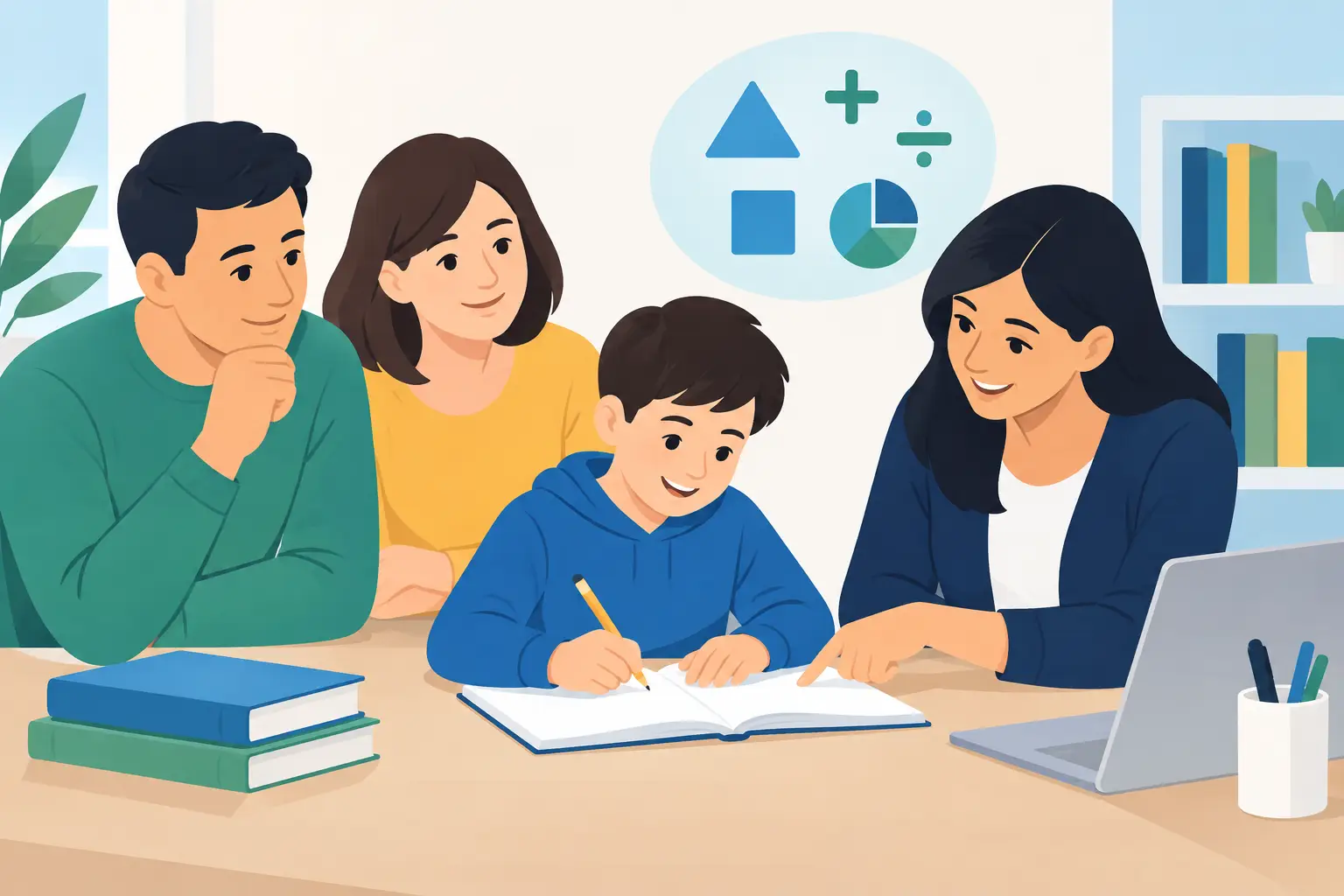
Why Small Class Sizes Build Better Grades
A student gets a fraction question wrong for the third time. In a large classroom, the lesson must move on. With small class sizes, a teacher can spot the exact gap – whether it is multiplication facts, converting fractions, or misunderstanding the question – and correct it before it becomes another lost mark in the next test.
For parents, class size is not just a number on a brochure. It affects how often your child is noticed, how quickly misconceptions are corrected, and whether tuition becomes a place for real progress rather than another lecture after school. The right small-group setting gives students expert teaching, focused practice, and the confidence to ask the questions they may hold back in school.
Why Small Class Sizes Make a Difference
Every child learns at a different pace. Some need one more worked example before algebra clicks. Others understand the concept quickly but need help applying it under exam conditions. When a teacher is responsible for too many students at once, it is difficult to respond to both needs well.
Smaller groups allow teachers to observe how students arrive at an answer, not simply whether the final answer is right or wrong. This matters across every subject. A student may lose marks in English comprehension because they copy a line without explaining its effect. In Science, they may know the content but fail to use the key terms required for an open-ended response. In Math, one missed step can turn a manageable problem into a blank page.
With fewer students, teachers can identify these patterns early. Feedback becomes specific: show your working here, define the term before explaining it, return to the passage for evidence, or check whether the units make sense. Those small corrections, repeated consistently, build stronger habits and better grades.
More Teacher Attention, Not More Pressure
Some students hesitate to speak up in a crowded class. They may worry that their question is too basic, that classmates will judge them, or that the teacher has no time to explain again. As a result, they nod along, go home confused, and fall further behind when the next topic begins.
A small class creates more room for conversation. Students can ask why a method works, not only which formula to memorize. Teachers can pause when faces show uncertainty and invite quieter learners into the discussion without putting them on the spot. That makes tuition feel productive rather than intimidating.
This does not mean students are given answers immediately. Good teaching still challenges them to think, attempt, and explain. The difference is that they do not stay stuck for too long. A teacher can give the right prompt at the right moment, helping the student move from “I cannot do this” to “I know how to start.”
For students who are already doing well, individual attention has a different value. They can be pushed beyond routine questions, improve accuracy, and learn how to earn the marks that separate an A from a High A. Small groups should support both recovery and achievement.
Better Feedback Leads to Better Exam Performance
School exams reward more than knowledge. Students must interpret questions carefully, manage time, present answers clearly, and avoid careless errors. These skills improve fastest when feedback is frequent and immediate.
In a smaller class, teachers have more opportunity to check homework, review practice papers, and explain why marks were lost. A student who repeatedly leaves out units in Math needs a different intervention from one who struggles with ratios. A student whose composition has interesting ideas but weak paragraph organization needs different guidance from one who has trouble with grammar and editing.
This is especially valuable for milestone examinations such as the PSLE. Students need solid foundations, but they also need familiarity with question types and a calm, reliable approach to papers. Small-group teaching makes it easier to combine concept revision with targeted exam practice.
The results are often practical and visible. Students become more accurate in calculations. They learn to structure English responses with evidence. They recognize command words in Science questions and use the correct vocabulary. Instead of guessing what went wrong after receiving a test paper, they understand the reason and know what to do differently next time.
A stronger approach to English and Chinese
Language improvement requires more than completing worksheets. Students need feedback on their phrasing, grammar, vocabulary choices, and organization. In a small class, a teacher can discuss why a comprehension answer is incomplete, how an editing error changes meaning, or how a stronger opening improves a piece of writing.
For creative and argumentative writing, students also benefit from hearing different ideas while still receiving personal direction. They can develop clearer paragraphs, more relevant examples, and formats that meet school expectations. The goal is not to make every student write in the same voice. It is to give each student the techniques to write with purpose and precision.
A stronger approach to Math and Science
Math confidence grows when students understand the steps behind the answer. Smaller classes give teachers time to diagnose whether difficulty comes from fractions, ratios, algebraic manipulation, or reading a word problem. Once the cause is clear, practice becomes more effective.
Science requires the same precision in a different form. Students may remember facts from Biology, Chemistry, or Physics but struggle to connect them in an open-ended answer. Teachers can show them how to identify the question focus, select relevant concepts, and explain cause and effect using accurate terms. That is how knowledge turns into marks.
The Right Class Size Depends on What Your Child Needs
Small does not automatically mean effective. A small group without a clear lesson plan, experienced teaching, or meaningful feedback will not deliver the support parents expect. The quality of the teacher and the structure of the program matter just as much as the number of students.
Likewise, one-to-one tuition is not always necessary. It can be useful when a student has a highly specific learning gap, needs intensive short-term intervention, or has a schedule that requires flexibility. But many students benefit greatly from a focused small group. They receive personal guidance while learning alongside peers who are working toward similar goals.
That peer element can be motivating. Students hear different ways to solve a problem, learn from common mistakes, and realize they are not alone in finding a topic difficult. A capable teacher keeps the group moving while ensuring no student is left behind.
When assessing a tuition program, parents should look beyond the class-size claim. Ask whether teachers review schoolwork and test papers, whether students receive guidance on weak topics, and whether lessons include exam strategies as well as content. Credentials also matter. Experienced educators understand common school expectations and know how to explain difficult concepts in a way students can use.
What Progress Can Look Like Over Time
Academic progress is rarely one dramatic leap after a single lesson. More often, it begins with smaller changes: a child starts attempting questions instead of skipping them, asks for clarification, or makes fewer careless mistakes. Then scores become more stable, confidence grows, and stronger grades follow.
Parents may also notice a change at home. Homework becomes less stressful because the student has a clearer method. Revision becomes more organized because they know which topics need attention. Instead of saying, “I do not understand anything,” they can identify a specific issue and work on it.
At Everyday Tuition, small-group lessons are built around this kind of practical progress: stronger concepts, targeted practice, and teacher guidance that helps students perform with greater confidence in school and examinations. Support for homework questions and paper marking also means learning does not have to stop when the scheduled lesson ends.
The best tuition environment gives your child enough attention to be seen, enough challenge to keep improving, and enough support to believe that better results are within reach. When teaching is personal and purposeful, each lesson becomes a real step toward stronger grades.